Making ideas strong enough to develop is not a one-day event where people simply vent opinions and run through a few frameworks (like SWOT), and then waiting for a management team to ‘do something with it. Too much energy is wasted on events like workshops, brainstorms, PowerPoints – that only serve to validate preconceived ideas. This kind of circus causes professionals to drop out and raise their eyebrows. They don’t feel called to develop concepts that lack a solid foundation, knowing that unreliable input will inevitably lead to misunderstandings.
“success is not only a matter of using the right method, but also of the people doing it and the circumstances in which the people find themselves.”
Richard Engelfriet - De succesillusie
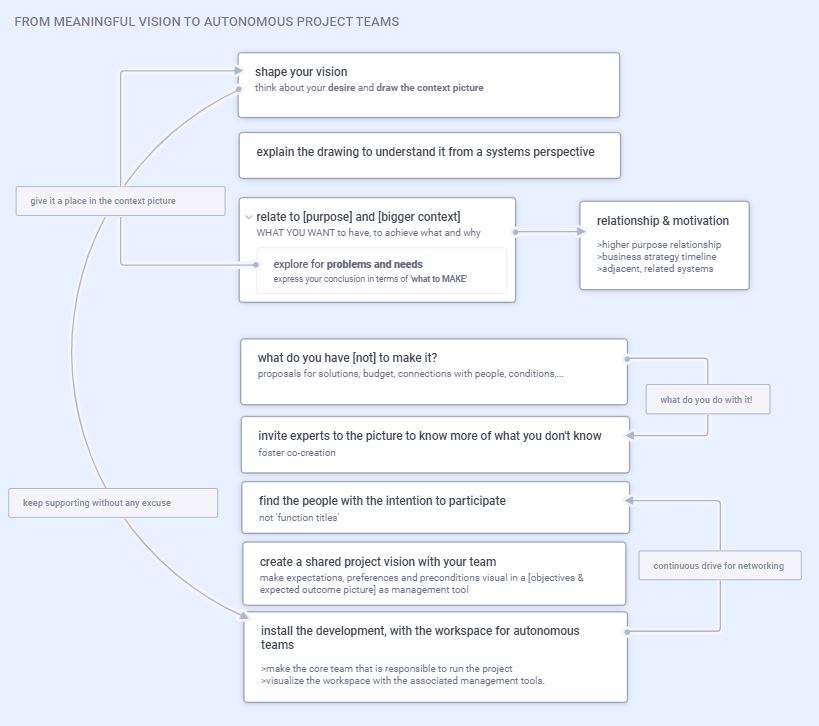
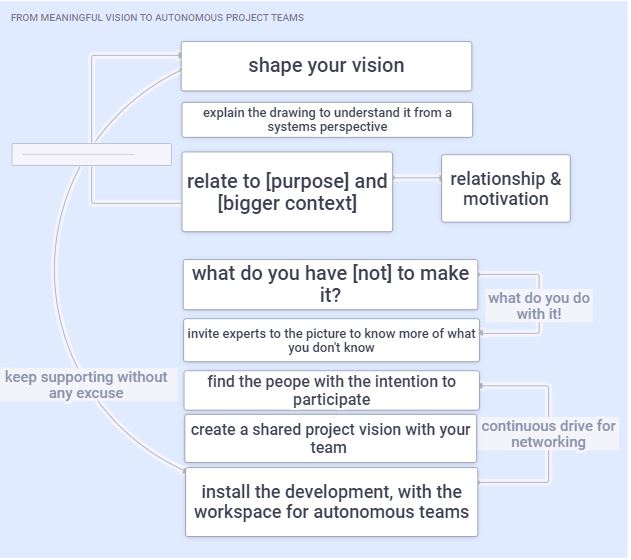
Create a compelling vision to equip autonomous project teams: a pattern-based approach.
Make ideas strong enough to develop into something worthwhile is a continuous collaboration between professionals.
In short discovery sessions of one to two hours, a Professional Triber facilitates technical and non-technical experts until they uncover meaningful work that a team is willing and able to pick up.
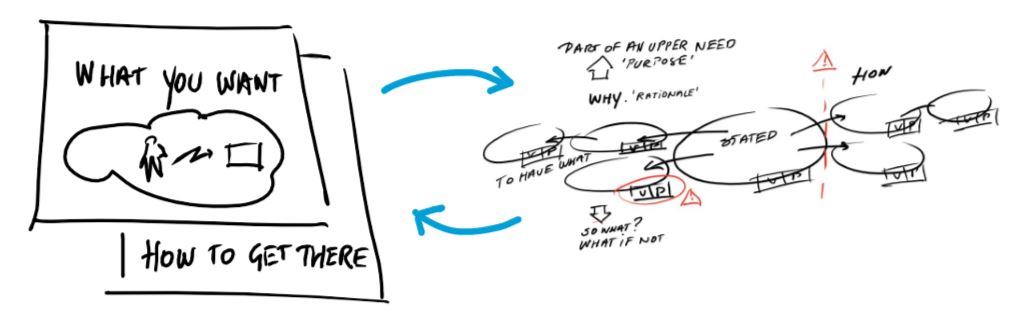
Clarifying a visionstarts with a sketch: a visual map of the situation and its underlying properties (pencil and paper are all you need). From there, ideas emerge from looking at the situation together: a common view that gives ideas meaning within a context. The situation itself can concern a product or service, a systems architecture, a user situation, or a business challenge.
“Visualizing what you want to achieve (together) is fundamental to build trust in collaboration”
A sketch that captures the expectation is the starting point to:
Uncover the underlying purpose behind the initial expectation.
Test the strength of the vision and initiate targeted research to ground assumptions in reality.
situation mapping is crucial with validation of statements
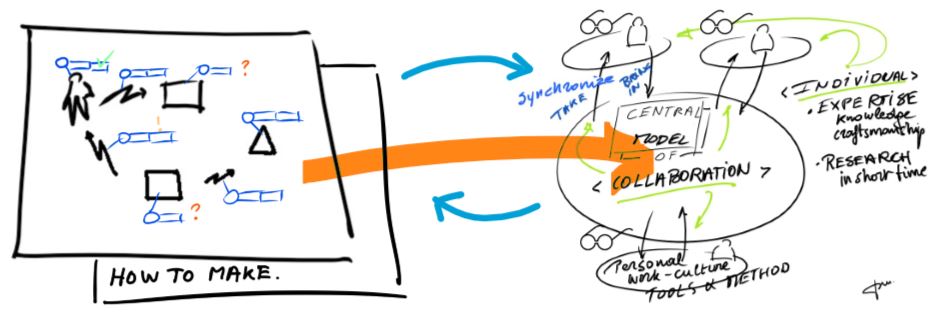
The sketch is clarified through conversations centered on ‘who, what, where, when, and how. It evolves into a system perspective used to:
Explore needs and problems, what can be built, and what is required to do so
Engage experts to identify blind spots and explore the gaps in our current knowledge.
connect experts to a system drawing
The sketch is enriched with the information needed to make clear what can actually be built.
People willing to take on the integral development are invited. The sketch that requires a solution is now on the table as a concrete project assignment.
A core team is formed and jointly creates the objectives & expected outcome poster, a shared reference for guiding the project.
These sessions keeppeople with different mindsets and backgrounds actively involved in a continuous flow of ideas and information.
Simple visualization, combined with a serious focus on creation and research, creates an environment in which professionals experience enough healthy tension and challenge to do meaningful work.
The discovery session stands for:
focus on understanding the value each person brings to the team
It is behavior that drive to work
create a sense of wonder and possibilities + testing
create something together before leaving the conversation [visual system map – simple, even if you can’t draw]
sense-making, engage for curiosity and discovery, asking questions [what, where, when, why, how, how much]
it is about purpose [not about requirements as: ‘must – should have’ that blocks innovation] and collaborative inquiry [research]
it is about learning!
as words from Tracey Ezard in the book "Glue"
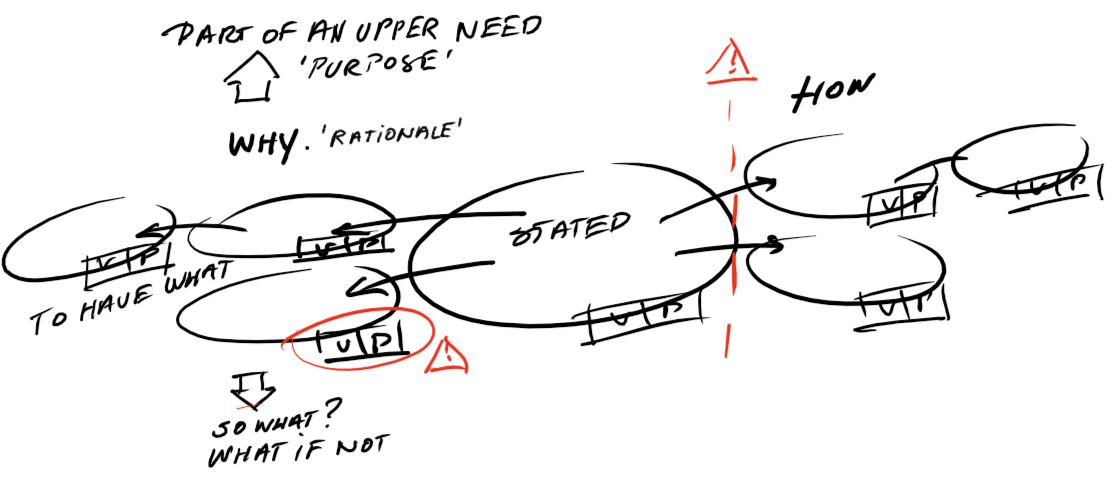
This mental model represents value discovery: proving that people actually want or need the project.
To challenge an idea or claim, identify what is strong and what is weak, and decide on the next best action.
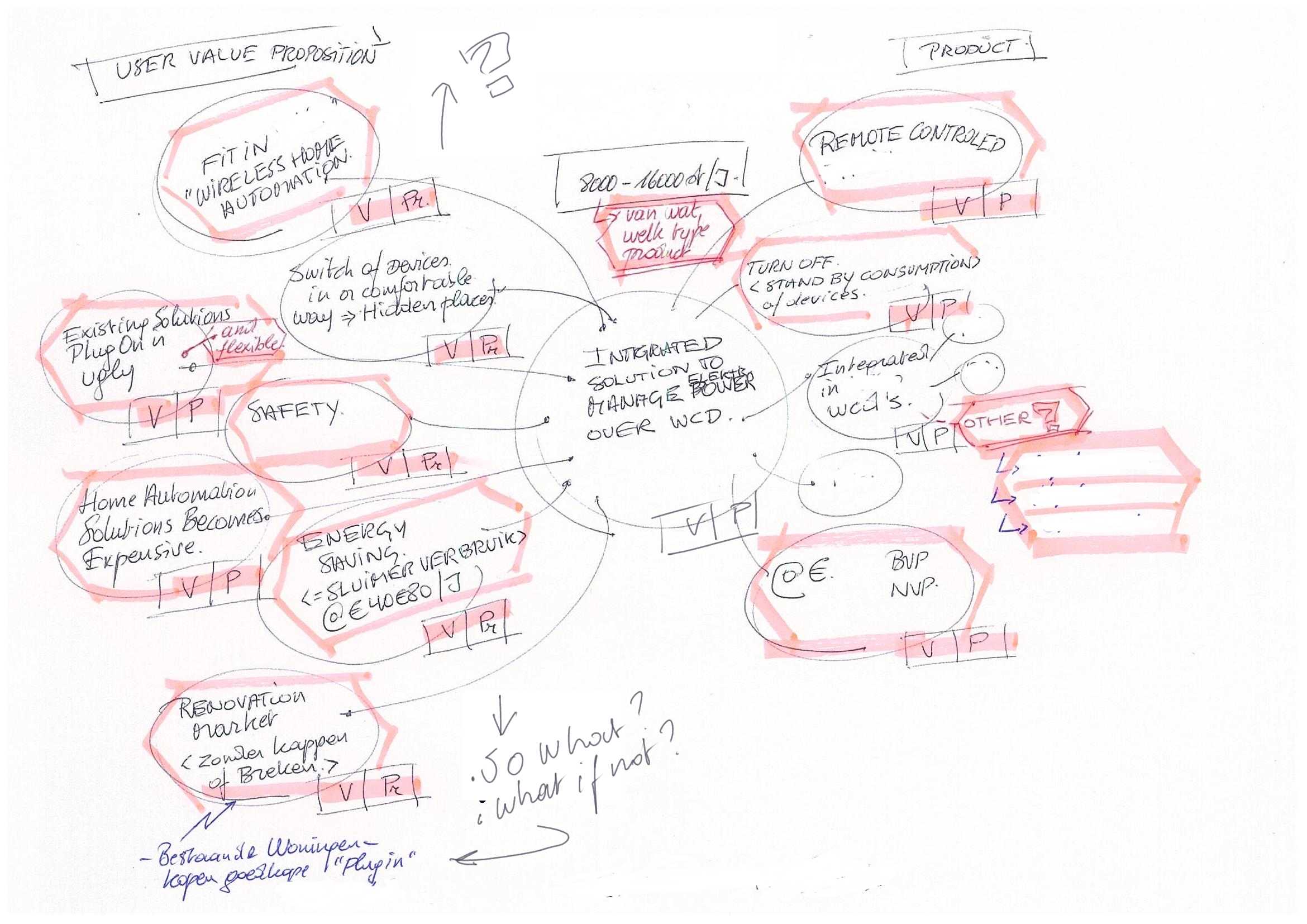
The subject is placed at the center. To the left, statements answer the why question in depth. To the right, possible solution directions are placed. Each item is questioned: is it valid or proven?
Do not move to solutions or execution when an item is not yet validated. First, do the research.
Try it. Your idea will quickly turn red — don’t give up.
Give it a try, you will soon be in the red with your idea, but don't give up!
Example of a weak statement with many unknowns
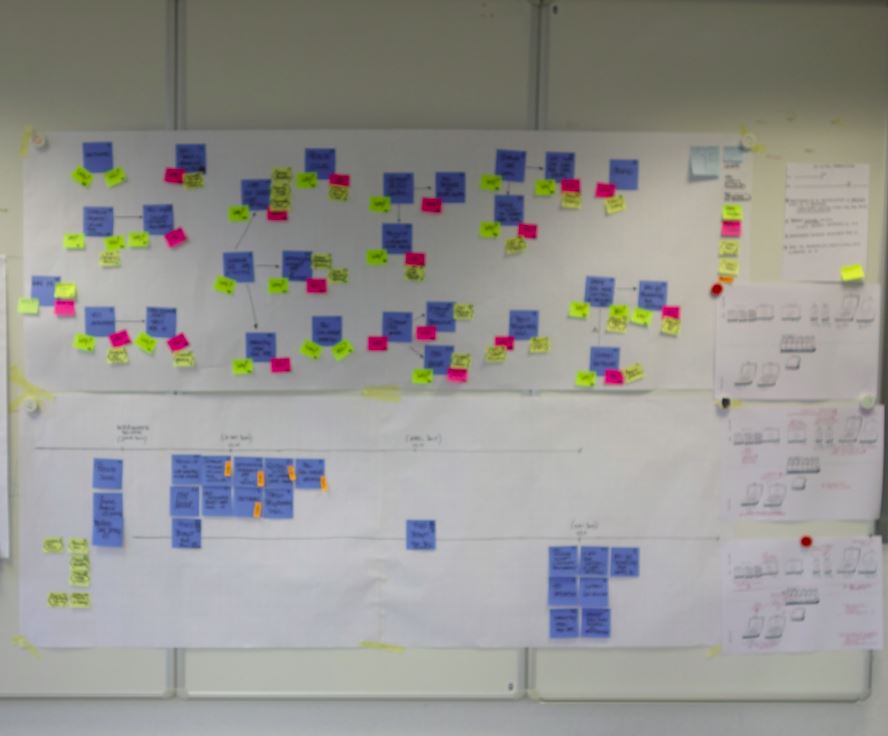
Example of an idea discovery session and work plan board for the preparation of a system development
My next post will explore how a core team sets up and approaches the project, keeping the needs of the customer and user squarely in their crosshairs at every step.
Did you find this post interesting? Share it with your network!